
Even the persistent rise in equity market failed to restrict the rupee's fall.

Piped cooking gas rates are also increased by Re 1 with effect from midnight.

The first major devaluation of the rupee happened in 1966 when it was pegged against the US dollar at Rs 4.75/$

The chances of a rate cut in September have risen.

The sharp pullback in mid and smallcap stocks signals a cooling-off period in segments that previously attracted considerable investor interest.
.jpg)
The company will be increasing the prices of its compact car Beat, SAIL and multi-purpose vehicle Enjoy by 1.5 per cent, which translates to a range of Rs 2,000 to Rs 10,000.

India's exports may have touched an all-time high of $422 billion in 2021-22 but recession in key western markets and geo-political crisis due to the Russia-Ukraine war are expected to impact the growth of the country's outbound shipments in 2023. All the global trade promoting factors like political stability, movement of goods, adequate availability of containers and shipping lines, demand, stable currency and smooth banking systems are in disarray. Adding to the woes, COVID cases have again started rising in countries like China, Japan, South Korea and the US.

Markets extended losses for the third straight day and ended over 1% down on Thursday, amid weak global cues, as institutional investors booked profit in blue chips.

'It was because of the huge selloff in the Indian equities that the rupee fell so sharply against the dollar on Friday.'

Exports to Europe shrank by near 2 per cent in the 11 months.

'When the rupee was at 65 a dollar, we wanted to go to Thailand for a holiday.' 'Now at 72, we may find Goa much more attractive.' 'That's how correction happens.' 'If you don't let that correction happen, then it's a pressure cooker that bursts one day.'

Increased demand from oil importers for the American currency and a weak opening in the domestic stock market also put pressure on the rupee.
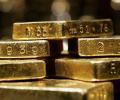
Gold, a safe-haven bet, is likely to continue its record-smashing journey in the New Year, rising to Rs 85,000 per 10 grams and even Rs 90,000 level in domestic markets if geopolitical tensions and global economic uncertainties continue.

Thanks to rupee depreciation, India has a chance to fundamentally rework its stifled manufacturing sector.
The rupee had slumped to its all-time closing low of 68.80 a dollar on August 28, 2013.

'Exposure to small and midcap stocks exceeded desired levels in many portfolios, prompting rebalancing.'

An over-capacity situation in China would dent India's drive to ramp up exports.

The criticism that the Reserve Bank of India was behind the curve in hiking interest rate to tame rising inflation is unfair, former RBI Governor D Subbarao said on Wednesday and asserted that it is difficult for any central bank to anticipate the future more accurately. Earlier this month, Monetary Policy Committee (MPC), the central bank's rate-setting panel, surprised the markets with a 40 basis points hike in repo rate in an off-cycle policy meeting. It was also the first rate hike after August 2018, amid spiralling inflation.

RBI Governor Shaktikanta Das on Wednesday defended the Reserve Bank's handling of the price situation, saying acting prematurely on inflation would have exerted a heavy cost on the economy and citizens. Acknowledging that the inflation target has been missed, Das said the RBI decided to support the economy by not introducing a rate hike in face of a spike in inflation. "We prevented a 'complete collapse of the economy' by keeping rates lower and stayed away from premature tightening," Das said speaking at the annual FIBAC conference of bankers in Mumbai.

The combined wealth of India's dollar billionaires is now equivalent to 33.81 per cent of India's nominal GDP.
In India, gold breached all previous records to hit the high of Rs 14,320 per 10 gm taking consumers and stockiest out of the trading floors.

After a robust 2023, foreign investors significantly scaled back their investments in Indian equities in 2024, with net inflows amounting to over Rs 5,000 crore, as elevated domestic valuations, coupled with geopolitical uncertainties prompted investors to adopt a more cautious stance. Looking ahead to 2025, FPI flows into Indian equities could see a recovery, supported by a cyclical upswing in corporate earnings, particularly in domestic-oriented sectors like capital goods, manufacturing, and infrastructure, Vinit Bolinjkar, head of research, Ventura Securities, said.

The rupee depreciated 39 paise to an all-time low of 82.69 against the US dollar in early trade on Monday as elevated crude oil prices and risk-averse sentiment among investors weighed on the local unit. Moreover, a negative trend in domestic equities and firm American currency sapped investor appetite, forex traders said. At the interbank foreign exchange, the rupee opened at 82.68 against the greenback, then slipped further to 82.69, registering a fall of 39 paise over its previous close.
.jpg)
Moody's became the first rating agency to retain the sovereign rating of Baa3 for the country after the rupee dived below 63 to the dollar, on Monday.

The Reserve Bank of India on Friday raised the benchmark lending rate by 50 basis points to 5.40 per cent to tame inflation.
Oil firms were supposed to break-even on sale of petrol, diesel, LPG and kerosene if the price of the basket of crude India buys were to come down to $67 per barrel. However, with 20 per cent depreciation in value of rupee against the dollar, the break-even point is now at $61 a barrel.

HMIL sells a range of vehicles starting from entry-level small car Eon to premium SUV Santa Fe, which are priced between Rs 325,000 and Rs 31.75 lakh

India's forex reserves declined $5.24 billion to $617.23 billion for the week ending February 9, according to weekly data released by the Reserve Bank of India (RBI) on Friday. The forex kitty stood at $622.5 billion for the week ended February 2. However, in the current fiscal, the forex reserves have increased $50.28 billion, the RBI data showed.

Amid rupee's free fall and slowdown in western markets, the government is likely to announce incentives in the foreign trade policy (FTP), scheduled for June 5, to boost exports.
Rupee depreciating to an all-time low of Rs 57.30 to a US dollar has wiped away most of gains arising from oil dropping below $90 a barrel for the first time since December 2010.

The rupee had gained by 50 paise or 0.75 per cent in two weeks.
The rupee has depreciated by over 12 per cent since the beginning of the fiscal.

According to the global financial services major, FIIs have recouped around 25 per cent of the outflows seen over the June-August period, when the country witnessed its sharpest bout of FII outflows since the global financial crisis.

The rupee plunged 90 paise to close at an all-time low of 80.86 (provisional) against the US dollar on Thursday after the US Federal Reserve's interest rate hike and its hawkish stance weighed on investor sentiments. Forex traders said the US Fed's rate hike and escalation of geopolitical risk in Ukraine sapped risk appetite. Moreover, the strength of the American currency in the overseas market, a muted trend in domestic equities, risk-off mood and firm crude oil prices weighed on the rupee.

The Indian economy recovered from the Covid-induced downturn during 2022 and is poised for further improvement in the coming quarters though downside risks emanating from geopolitical tensions, strengthening dollar and elevated inflation will continue. The positive trajectory in the growth trend and improved fundamentals will help the nation in neutralising the impact of global headwinds which are expected to have a bearing on the country's exports in the months to come. The challenges before the government and the Reserve Bank in the new year would be to arrest inflation, check declining value of rupee against US dollar and promote private investment and growth, with a view to ensure that the country remains one the fastest growing major economies of the world.

The average rate of rupee depreciation vis--vis the dollar over the last 20 years is around 3.50 per cent per annum
The Rajkot-based auto component industry, which was doing well last year, has hit multiple road blocks -- rupee depreciation, high interest rates and high petrol prices.
Markets ended Tuesday's session on an extremely weak note with benchmark indices falling nearly 3% each after the rupee depreciated closer to its all time low level of 68.80.
RIL and ITC accounted for 25% fall in the Nifty.
